






There’s no better way to ring in the new year than by highlighting the records of Tufts' “rockiest” department: Earth and Ocean Sciences! (Now known as the Department of Earth and Climate Sciences.) UA159, also known as the Department of Earth and Ocean Sciences Records, contains articles; books and booklets; building plans; correspondence; course catalogs and course packets; equipment and instruments; notes; photographs; and serials documenting the activities and endeavors of the Department of Earth and Climate Sciences.
Originally called the Department of Geology, this campus unit first appeared in the Catalogue of Tufts College in the 1892-1893 academic year. Ahead of the 1902-1903 academic year, the Department of Geology articulated the following philosophy and mission statement: "The subjects offered in the department of Geology have a twofold object: to give an outline of the structure and history of the earth; and to give a training in the methods of observational science.” The Department of Geology began offering a Master of Arts degree for the 1939-1940 academic year but concluded this degree program after 1971. In 2012, the name of the department was changed to the Department of Earth and Ocean Sciences and was changed again in 2025 to its current iteration, the Department of Earth and Climate Sciences.
The equipment and instruments in this collection include Gurley survey scopes, Leitz microscopes, and Leitz binocular microscopes. These historical instruments were likely used in classroom settings for courses such as Physical Geology and Geographic Distribution of Raw Materials during the first half of the twentieth century.
Other items TARC has accessioned from the Department of Earth and Ocean Sciences include specimen collection inventories, surveying equipment, a chemistry set, course descriptions, and teaching manuals, among other materials.
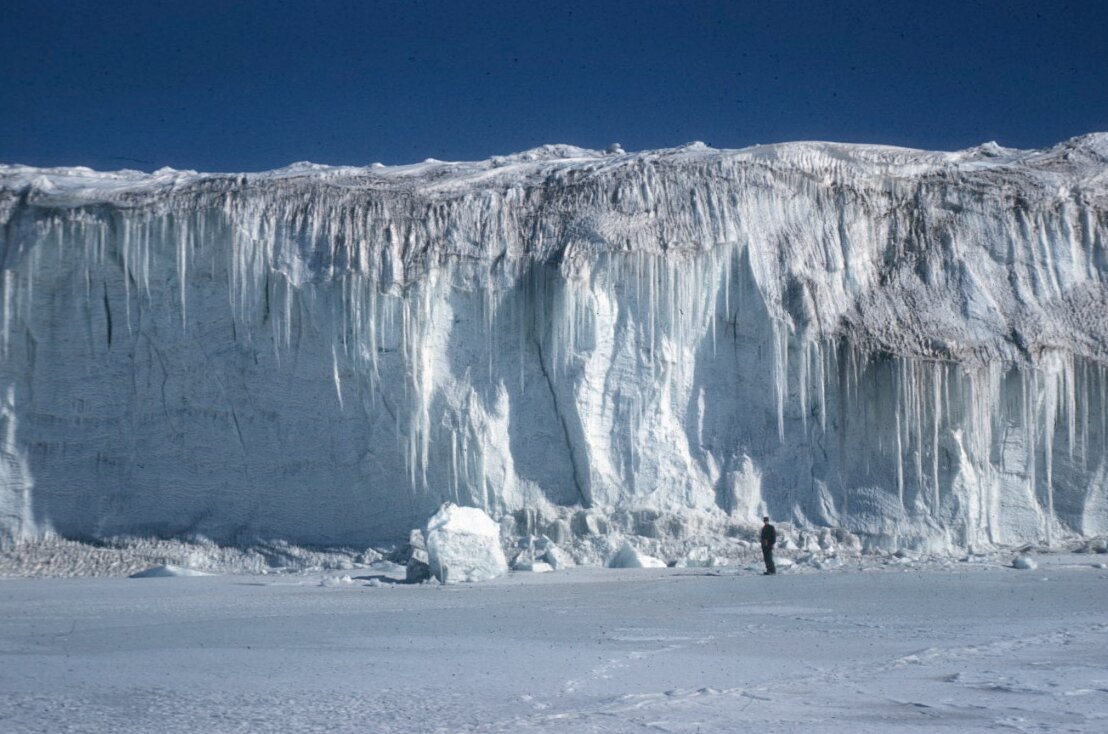
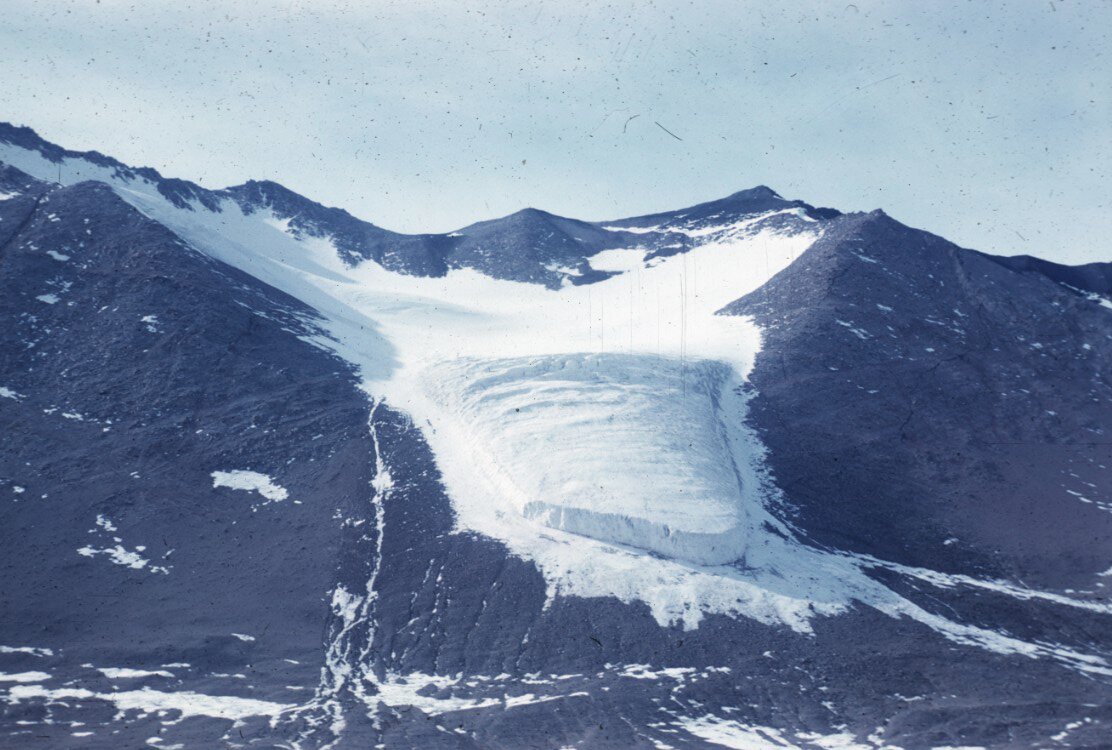
The collection also features photographs taken by Robert L. Nichols, a noted explorer, geologist, Tufts faculty member, and chairman of the Department of Geology. Slides taken between 1958 and 1961 during Antarctic expeditions to Victoria Land, particularly the Wright Valley of the McMurdo Sound area, focus on glaciers. Nichols brought several Tufts undergraduate students with him on these expeditions. At the time, there were several glaciers in the valley that did not yet have names—he was not allowed to name a glacier for himself, so he instead named them after four of his field assistants. As a result, four glaciers in the Wright Valley have the names of Tufts undergraduates: William Meserve, Roger Hart, Robert Goodspeed, and Parker Calkin. Bill Meserve later served on the Tufts Board of Trustees, while Parker Calkin was a geology professor at SUNY Buffalo for over 40 years. A Tufts Weekly article from 1959 goes into detail about Nichols’ preparation for the expedition to Antarctica with his students:
“The expedition, to study various aspects of geology, will explore a part of McMurdo Sound and will then proceed at ten miles a day over the frozen ice to Marble Point and Granite Harbor... Dr. Nichols, who will be experiencing his fourth journey to the Antarctic and his third to the general exploration area, expects that the boys will stand up well in the four month trip. While helping Dr. Nichols gather data, the students will continue their studies. Each man’s diet will contain 7,000 calories daily, including one pound of meat, in order to survive under adverse conditions.”
To learn more about the Department of Earth and Ocean Sciences Records, visit the online finding aid, send us an email at archives@tufts.edu, or stop by our Reading Room on the ground floor of Tisch Library to take a look at them in person!