






This month, we welcome readers to look westward to Grafton, MA, to learn more about Tufts’ very own school of veterinary medicine, the Cummings School.
The School of Veterinary Medicine was established in 1978, opened in 1979, and graduated its first class in 1983. Established through the advocacy of President Jean Mayer, the school was unique in its affiliation to a health sciences complex rather than to a school of agriculture.
The school is located on a 634-acre campus in Grafton, Massachusetts, site of a former state mental hospital. The school also shares facilities with the medical and dental schools on Tufts’ downtown Boston campus, where vet students receive their first year of instruction in the basic sciences. The Cummings School spent its first year of existence exclusively as part of the Boston campus, but ground was broken in Grafton soon after in 1980.
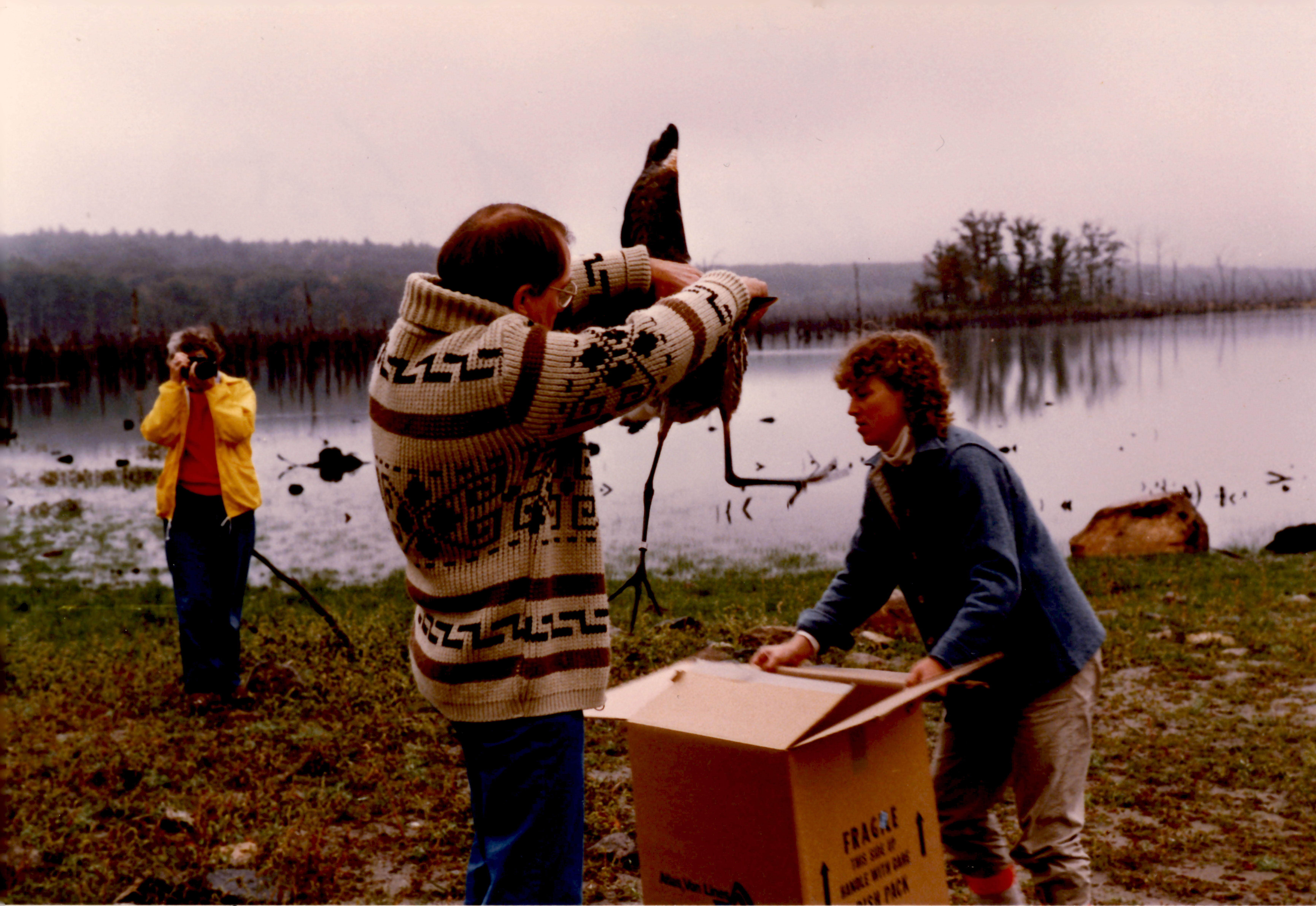
Students at the veterinary school are exposed to care of all types of animals including food (cattle, sheep, swine, goat), fiber (sheep, llama), companion (dog, cat), and sporting (horse) animals. In addition, students are given the option of learning about care for wildlife through the wildlife medicine program. Along with surgery, preventive medicine, and public health, the school also educates students about ethics, conservation medicine, and human-animal relationships.
Initial discussions on the establishment of a veterinary school began in the early 1970s as the absence of such a school in the New England region combined with a prediction of a nationwide deficit of veterinarians made the need apparent. After a variety of options were explored, including locating a school at the Otis Air Force base on Cape Cod, Tufts, under Jean Mayer's leadership, stepped forward to take the lead in the project. Richard B. Talbot, dean of the College of Veterinary Medicine at Virginia Polytechnic Institute and State University was brought in as interim dean to oversee the startup of the school on a part-time basis. On April 29, 1978, the trustees voted to establish the school as part of Mayer's vision of an integrated "one medicine" program embracing the totality of medical, dental, veterinary, and nutritional education.
Today, the Cummings School provides clinical facilities as part of the Tufts-New England Veterinary Medical Center, which includes the Foster Hospital for Small Animals, the Large Animal Hospital, the Cornelius Thibeault Equine Clinic, the Amelia Peabody Pavilion, the Issam Fares Equine Sports Medicine Program, the Harrington Oncology Program, and the Wildlife Clinic at Grafton, as well as the Marine Biological Laboratory at Woods Hole, and the Ambulatory Farm Clinic based at Woodstock, Connecticut.
The degree of Doctor of Veterinary Medicine (D.V.M.) is the primary degree offered, though since 1995 the school also offers a Master of Science (M.S.) in Animals and Public Policy. The school features several signature programs which offer specialized perspectives on veterinary sciences, including Wildlife Medicine, Equine Sports Medicine, International Veterinary Medicine, Ethics and Values in Veterinary Medicine, and Biotechnology and Veterinary Medicine.
Through the records of the Cummings School of Veterinary Medicine at TARC, one can learn about the establishment and growth of the school through a unique lens. The collection contains materials such as correspondence, publicity materials, reports, planning materials, and minutes of the executive faculty board. Also included are scholarly works and academic materials such as master’s theses, subject files, course syllabi, historical research material, and publications. Also included are audiovisual recordings and oral histories relating to the Cummings School’s past.
Especially notable within the collection are videos, photographs, and other records related to the Tufts Wildlife Clinic, a specialized teaching hospital within the Cummings School that caters specifically to wild animals injured within New England. The Wildlife Clinic serves and collaborates with institutions such as the U.S. Fish and Wildlife Service (USDA), the divisions of fisheries and wildlife for the six New England states, municipal animal control agencies, state Audubon societies, licensed wildlife rehabilitators, zoos, and aquariums.