






From the rainbow steps to the Jumbo statue, Tufts campus in Medford/Somerville is full of landmarks that make it unique. Even before most of campus as we know it was built, Walnut Hill was a space with its own character.
Tracing changes through time
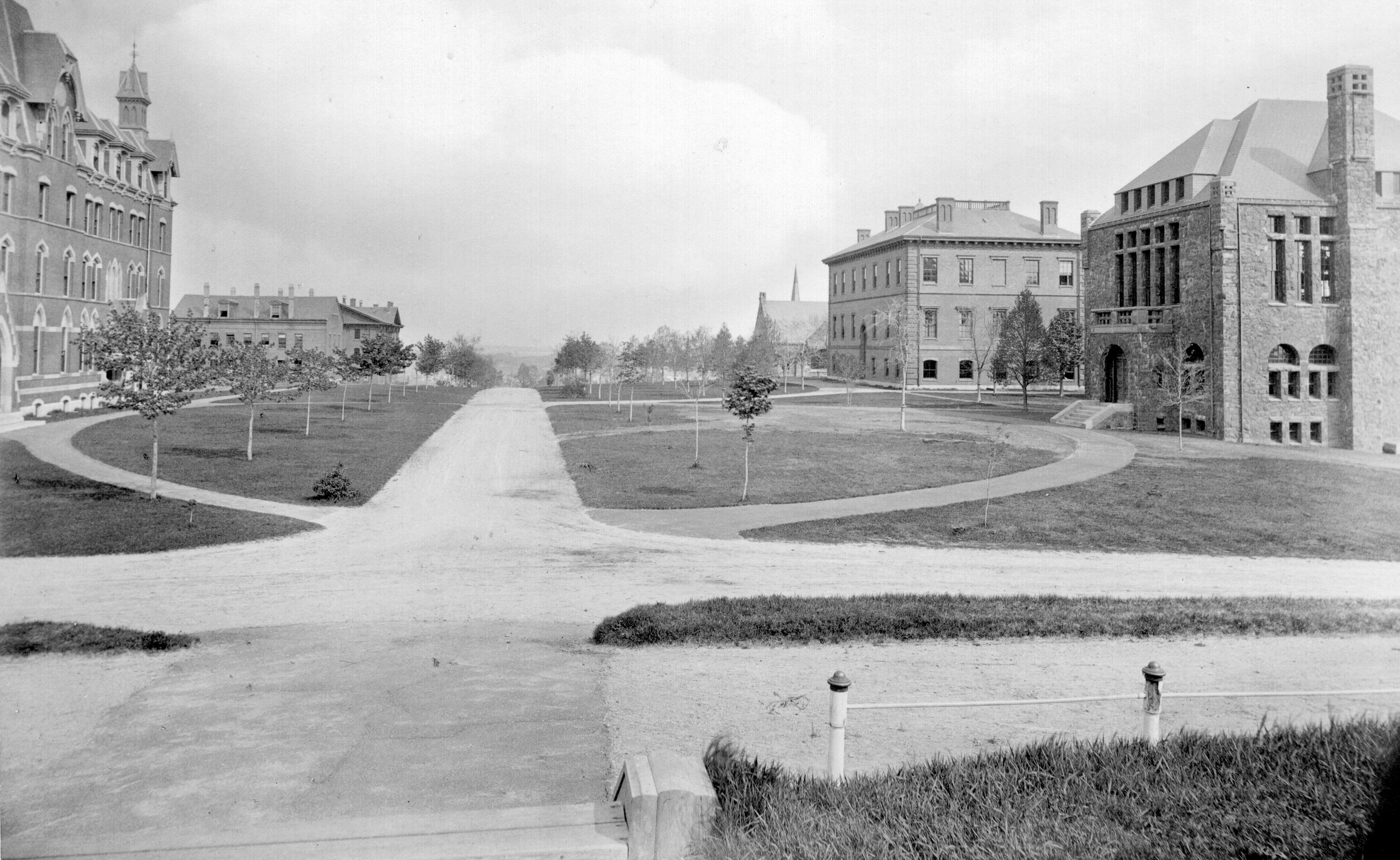
Ballou Hall, built in 1854, was the cornerstone of campus in Tufts’ early days—in fact, it was a one-stop shop that included a dining room, lab space, classrooms, two chapel/assembly spaces, offices, living quarters, a “dynamo room,” and the college library. It had everything, but that meant space was at a premium. East, West, and Middle (known today as Packard) Halls were all built soon after, before 1872, to expand living and teaching space. Goddard Chapel and the Barnum Museum were added by 1884, further defining the shape of the academic quad. Photographs of this part of campus, even those taken before the turn of the 20th century, are easily recognizable as such.
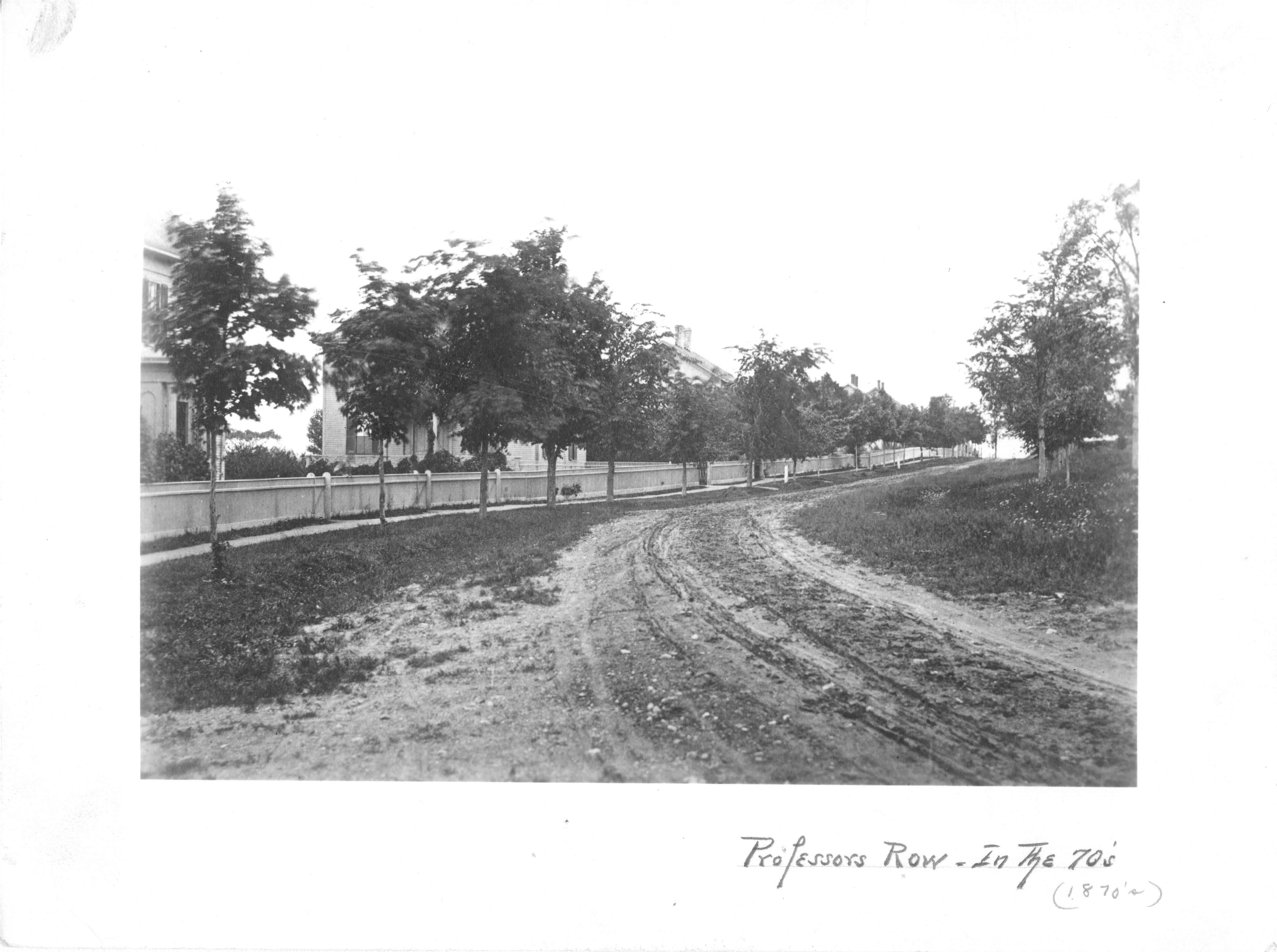
Beyond the academic quad, changes to campus are more pronounced. Professors Row still has many of its original buildings from Tufts’ early days, including Capen House, 20 Professors Row (formerly Lewis House), Anthony House, and Richardson (formerly Schneider) House. Although many of the buildings and the overall shape of the road are recognizable, it is difficult to imagine Professors Row as a dirt road or without trees. As it turns out, the height and density of trees in early photos of campus are a good way to figure out when that photo was taken.
If the academic quad has changed the least in the past 174 years, the residential quad has changed the most. However, its contemporary nickname is still surprisingly accurate. “Rez” didn’t always mean residential; it used to be short for reservoir.
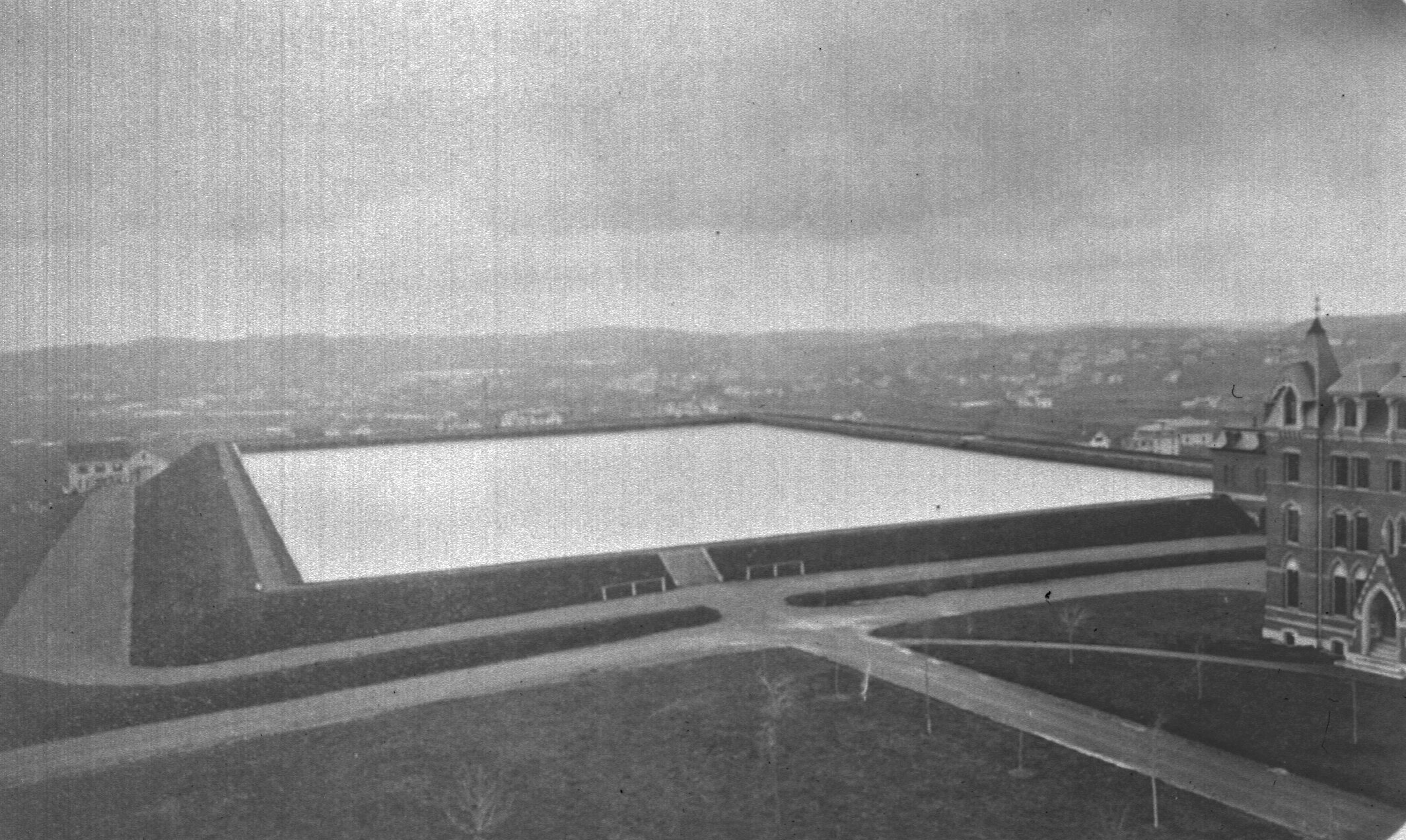
The Reservoir, known familiarly as the “Rez,” was built in 1861 to expand the water supply for the cities of Charlestown, Somerville, and Chelsea, although it was soon relegated to emergency water as the Boston metropolitan area expanded. While Tufts did not officially own the Rez until after it was drained in 1944, it had long since been part of college tradition. Not only were its elevated banks the perfect spot for romantic walks, the Rez was also a common site for concerts, group photographs, and assembly events. Though swimming was forbidden, this was also a popular activity—the site is even labeled “Old Swimming Hole” on an official map of campus from 1929.
In photos, the lack of such a large body of water on campus is quite striking. There is no doubt that students felt the loss long after it was drained and filled, and that its imprint still lingers on the hill.
Landmarks long forgotten
Accounts of Tufts from the past help us remember that not every campus landmark has survived the test of time. Edwin B. Rollins, E1901, was an alumnus turned Electrical Engineering professor at Tufts. In addition to his teaching and administrative duties, he took countless photographs and compiled detailed histories of campus buildings in a series of notebooks. One of the most valuable things about Rollins’ accounts, in addition to their organization and clarity, is his inclusion of anecdotes, traditions, and legends gathered during his time at Tufts. We have him to thank for much of what we know about the Rez, the many original uses of Ballou Hall, and other architectural intricacies. Rollins also kept track of changes in campus footprint, density, and landscaping. For instance, he wrote on another body of water on campus just as creatively named as the Reservoir; the “Old Artificial,” an artificial pond near Powder House Square.
Prior to 1893, when portions of campus still served as farmland for faculty livestock, the current site of Ellis Oval was used as a pasture. A small brook that ran alongside it was dammed in the 1860s in order to hydrate the grass, and as a result, water collected and “Old Arty” had formed by the 1870s. In addition to doing time as a swimming hole in the summer, it froze perfectly for ice skating in the winter. According to High on the Hill, it was a hotbed of activity for frogs. Changes in grading and drainage as well as the banishment of cows from campus meant this landmark was history after WWI.
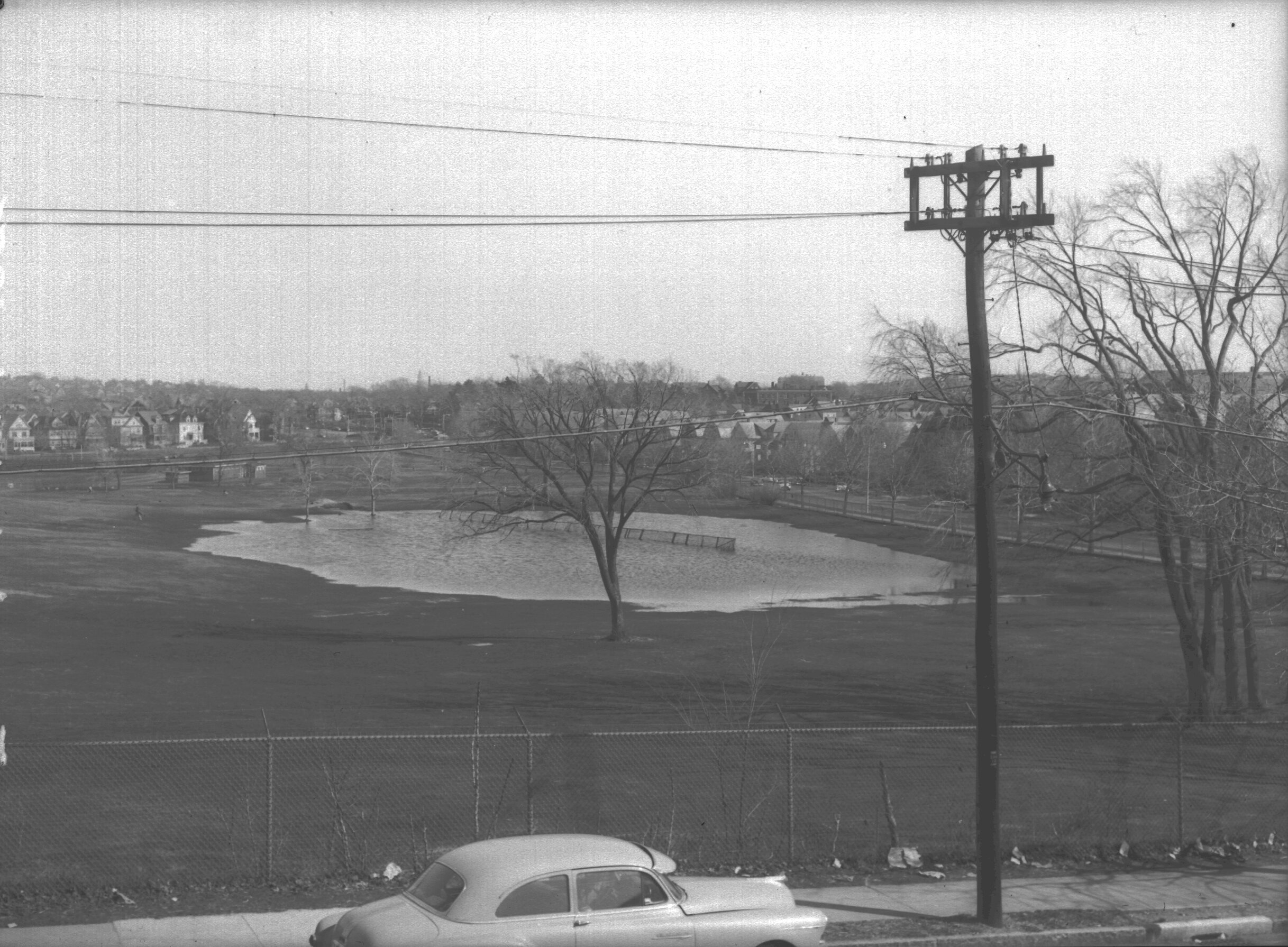
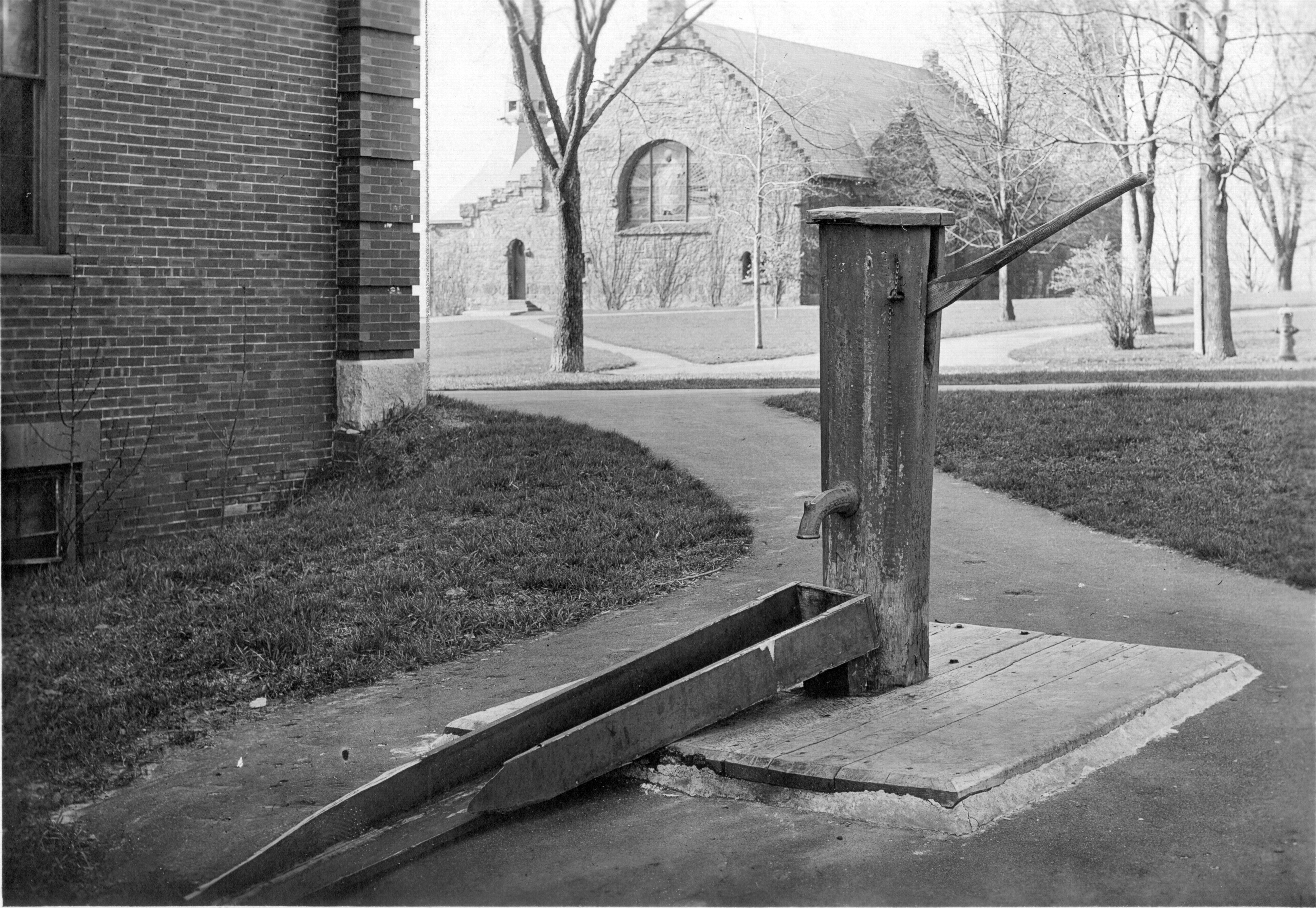
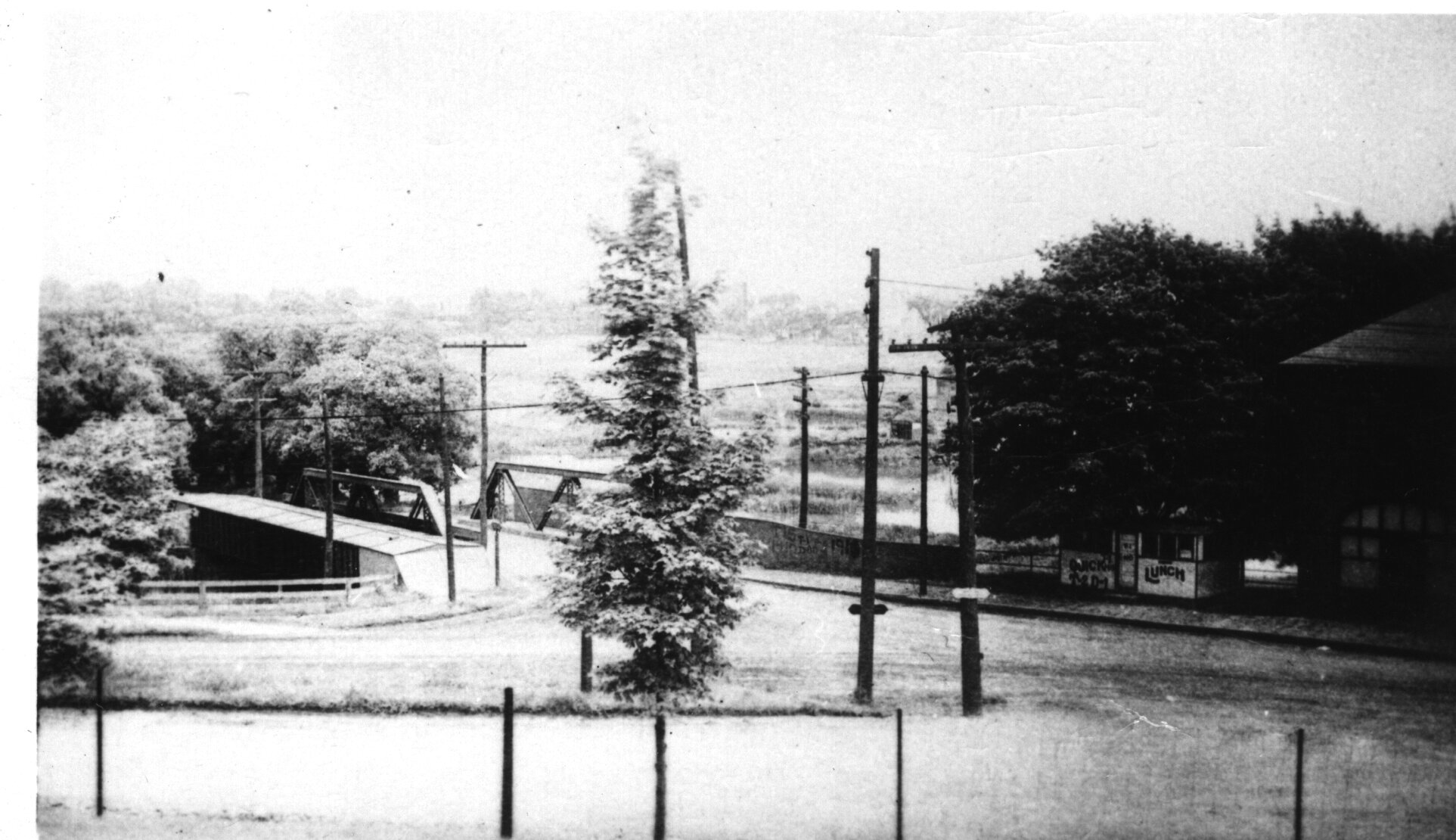
Other bygone campus landmarks can be gleaned from looking through photographs. Even without much context, captions alone can help us figure out what was important to Tufts communities of yore. Two of Rollins’ photos, “The Bubbler on the Quad” and “The ‘Dog Cart’ beside Curtis Hall” are examples. (To be clear, the Dog Cart was a hot dog booth that parked outside Curtis every day to capitalize on early Tufts students’ distaste for dining hall fare.) There is so much behind each of these simple titles, as if Rollins thought they needed no further explanation. Their ubiquity on campus may have faded, but thanks to these photos their legacies can still be felt.
Explore past views and accounts of campus in the following collections:
Facilities Management records https://archives.tufts.edu/repositories/2/resources/566
Rollins papers https://archives.tufts.edu/repositories/2/resources/315
Munro papers https://archives.tufts.edu/repositories/2/resources/609
Historical Materials collection https://archives.tufts.edu/repositories/2/resources/217